Luxury estate management in Spain: what they need and how to digitalise them
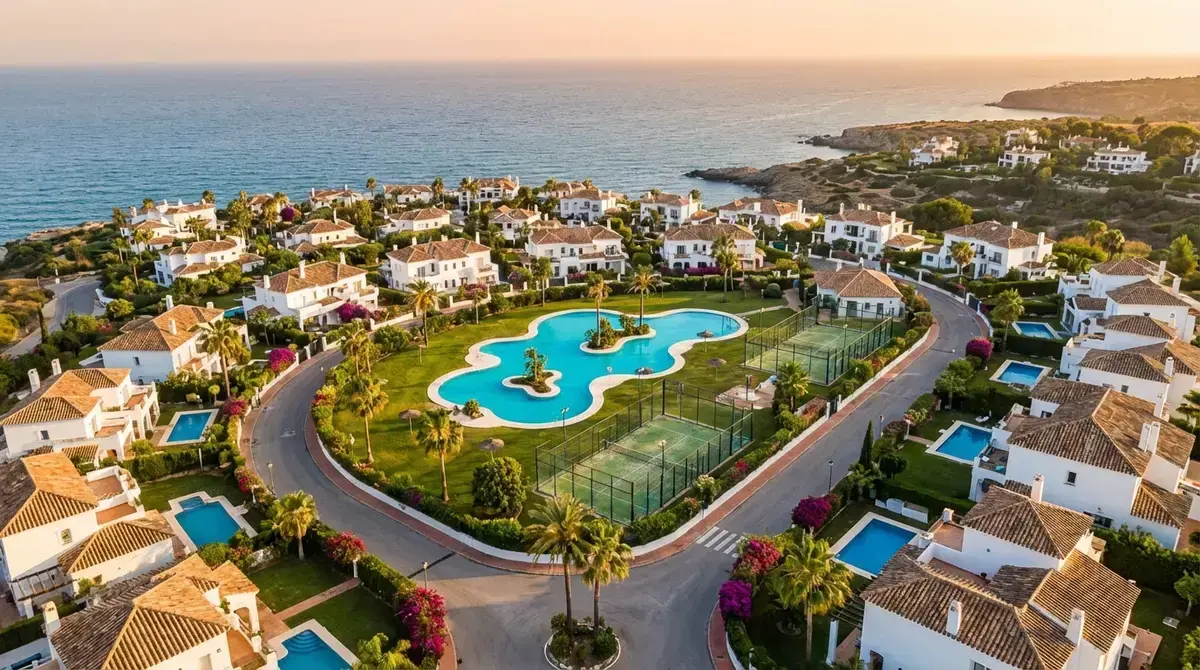
Spain is home to some of Europe’s most exclusive residential estates. From La Zagaleta in Marbella to La Moraleja in Madrid, Sotogrande or the Costa del Sol’s gated communities, these developments share one thing in common: their management needs bear no resemblance to those of a typical homeowners’ association.
Yet most are still run with tools designed for a 20-unit apartment block.
What makes a luxury estate different
A high-end residential estate is not simply a “bigger” community. The differences are structural and affect every aspect of management:
International owners
In estates like La Zagaleta, over 70% of owners hold foreign nationalities — German, British, Arab, Scandinavian and beyond. Each one expects to communicate in their own language. Notifications, meeting agendas and booking instructions must arrive in the owner’s language, not only in Spanish.
No generic community management platform offers genuine multilingual communication. And sending a translated PDF by email is not a solution worthy of a community where monthly fees run into thousands of euros.
World-class amenities
We’re not just talking about one padel court and a pool. Luxury estates typically feature:
- Multiple padel and tennis courts
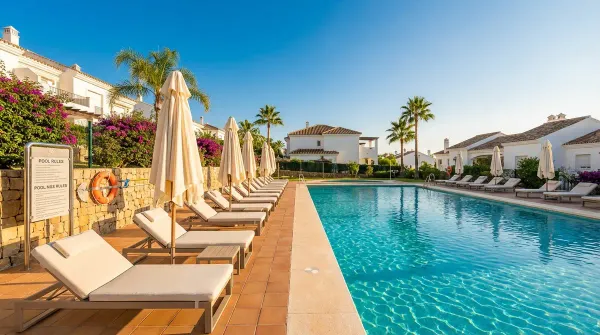
- Pools with capacity control and time slots
- Spa, gym and fitness rooms
- Event halls and meeting rooms
- Barbecue areas and outdoor dining spaces
- Golf courses or multi-sport zones
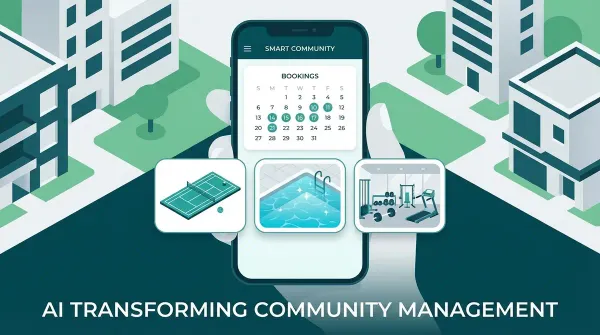
Each space has its own rules, timetables and restrictions. Managing all of this with spreadsheets, notice boards or WhatsApp groups simply doesn’t work. What’s needed is a flexible booking system with custom rules for each amenity.
Security and access control
Security is the number-one priority. High-profile owners — business leaders, diplomats, public figures — need to know who enters and exits the estate. Traditional systems based on physical keys and garage remotes have obvious flaws:
- Keys get copied without oversight
- Remotes are duplicated or lost
- There is no access log
- Granting temporary access to a visitor or contractor requires manual intervention
The solution is digital access control: unlock doors from your phone, send temporary QR invitations, maintain a complete entry and exit log, and eliminate physical devices entirely.
Privacy and data protection
Owners in these estates value their privacy above all else. They do not want their name, address or usage habits exposed in systems shared with other communities. They require:
- Data hosted within the EU under strict GDPR compliance
- Granular control over who sees what information
- A guarantee that their data is never shared or commercialised
The real problems nobody is solving
After speaking with presidents and administrators of high-end estates, the most recurring issues are:
1. Generic software that doesn’t represent the community
Community management platforms all look the same: a generic logo, standard colours, an interface that could belong to any apartment block. For an estate that invests hundreds of thousands of euros in landscaping and architecture, using an app that resembles a government form is unacceptable.
The answer is an application carrying the estate’s own visual identity: its logo, its colours, its aesthetic. Residents shouldn’t feel they are using a third-party tool — they should feel they are using their community’s app.
2. Communications that don’t arrive (or arrive wrong)
When an administrator sends a circular in Spanish to a community where half the owners speak English, German or French, the message is lost. General meetings are held without many owners understanding the agenda. Incidents are reported via WhatsApp in three different languages with no one centralising them.
3. Amenity conflicts
Without a clear booking system, padel turns go to the earliest riser, the pool is overcrowded on Saturdays and event rooms are reserved verbally with no confirmation. All of this creates unnecessary tension among owners who are paying substantial fees.
4. Dependence on physical keys and remotes
Every owner has a set of keys, every tenant another, every domestic employee yet another. When someone loses a remote, the entire system needs reprogramming. When an owner sells their property, there is no guarantee they return all access devices.
What a luxury estate truly needs
After over a decade managing homeowner communities across Spain, we have identified the requirements a high-end estate demands:
- A branded app of its own — not a generic app with a logo stuck on top
- A flexible booking system — with different rules for each amenity
- Digital access control — phone-based entry, temporary invitations, full access logs
- Multilingual communication — every owner in their language, automatically
- Complete privacy — EU-hosted data, strict GDPR, no information sharing
- Bespoke development — if something doesn’t exist, it is built specifically for that community
This is precisely the approach behind Colindar Private: we don’t adapt a generic product — we study each community and develop exactly what it needs. Total customisation, total privacy, total guarantee.
Conclusion
Luxury residential estates in Spain deserve tools that match their standards of excellence. It is not about paying more for the same software with a different logo, but about having a dedicated team that understands each community’s particularities and builds exactly what is needed.
If you manage or live in a high-end estate and want to explore how to modernise its digital management, get in touch for a no-obligation private consultation.
Want to know more?
Leave us your details and we'll contact you with no obligation.